How to Secure Commercial Fence Gates Properly

A commercial perimeter is only as secure as its most accessible opening. A well-built chain link, aluminum, or steel fence can define a property line and discourage entry, but an unsecured gate can give trespassers, thieves, or unauthorized vehicles the easy access they need. Knowing how to secure commercial fence gates means looking beyond a padlock and considering the gate’s construction, daily use, hardware, access requirements, and long-term maintenance.
For businesses, warehouses, apartment communities, schools, construction sites, and managed facilities across the Lehigh Valley, the right gate security plan should protect the property without making normal operations difficult. The best approach depends on what needs protection, who needs access, and how often the gate is used.
Start With the Gate’s Purpose and Risk Level
A gate serving a rarely used utility area has different needs than a driveway gate used by delivery trucks all day. Before choosing locks or electronic controls, consider the value of the assets behind the fence, the frequency of gate traffic, operating hours, visibility from the street, and whether the site needs a record of who entered.
A small equipment enclosure may be adequately protected with a commercial-grade locking system and reinforced chain link gate. A contractor yard storing vehicles, tools, and materials may require a heavier cantilever or swing gate with controlled vehicle access, lighting, and a gate operator. Multifamily properties often need a system that balances resident convenience with controlled entry.
Security is also about managing expectations. No fence gate makes a property impossible to enter, but professionally selected materials and hardware can make forced entry more difficult, more noticeable, and less appealing to an intruder.
Choose a Gate Built for Commercial Use
Security hardware cannot compensate for a weak or poorly supported gate. Commercial gates need frames, posts, hinges, rollers, and latches sized for the opening, the gate’s weight, and expected daily use.
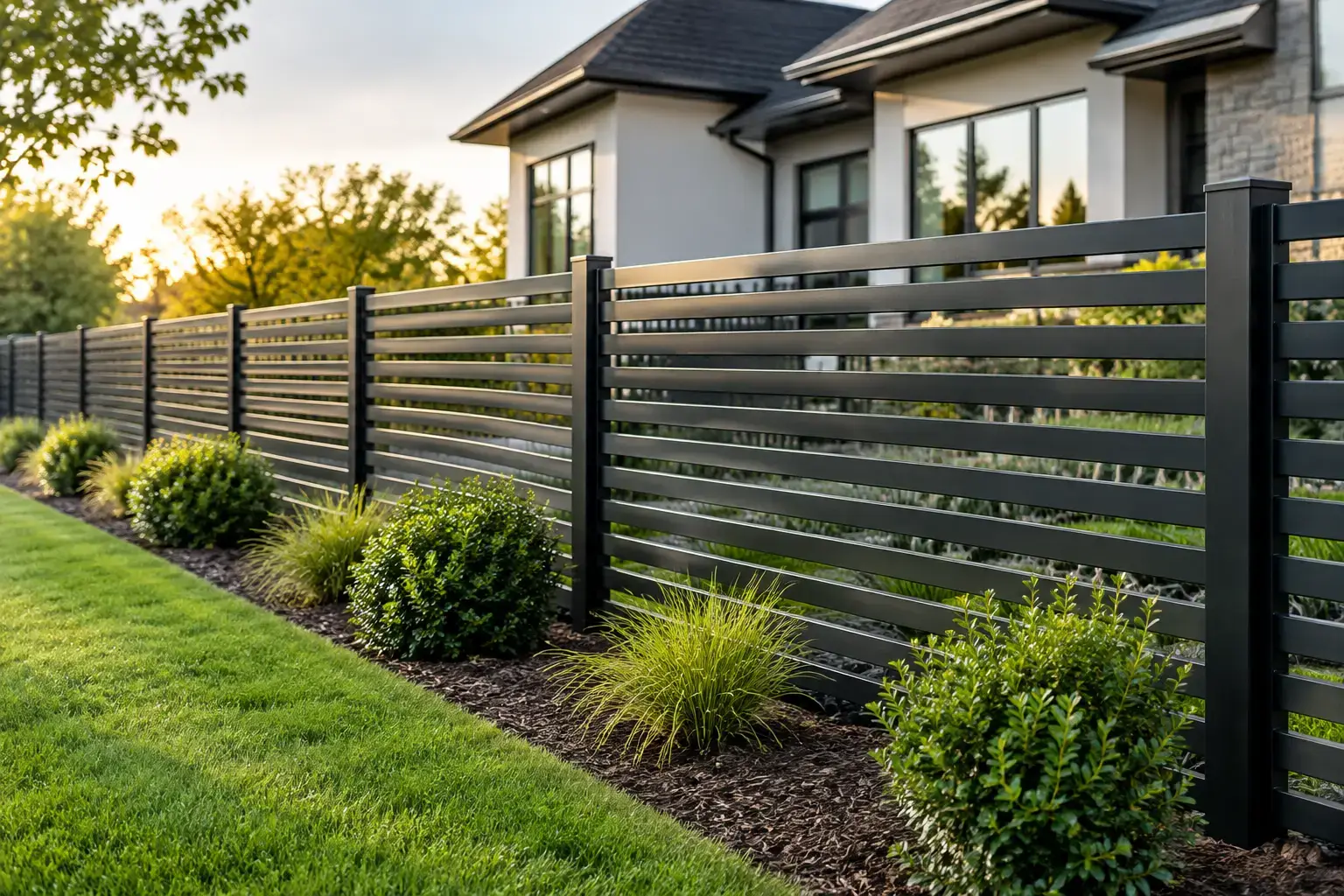
Chain link is a common choice for commercial properties because it offers dependable perimeter protection, clear sightlines, and flexible options for gate widths. For higher-security applications, heavier-gauge fabric, stronger framework, privacy screening, or barbed wire may be considered where appropriate and permitted. Ornamental aluminum fencing can provide a more polished appearance for office parks, community entrances, and other visible locations, although it should be paired with commercial-rated gates and access hardware.
For wide vehicle entrances, a cantilever slide gate is often a practical option. It moves along a supported track system without dragging across the driveway, which can be especially helpful in areas affected by snow, gravel, uneven pavement, or debris. Swing gates can also work well, but they need sufficient clearance, stable hinges, and properly set posts to prevent sagging.
A professional installation matters here. Gate posts must be set to handle the gate’s weight and leverage over time. In Pennsylvania, freeze-thaw cycles can shift soil and affect alignment when posts and footings are not installed correctly. A gate that drags, sags, or will not latch consistently invites workarounds that weaken security.
Use Commercial-Grade Locks and Protected Latches
The lock is only one part of the system. The latch, hasp, and surrounding gate frame need to resist prying, cutting, and repeated use. Light-duty residential hardware may be convenient, but it is rarely the right choice for a commercial perimeter.
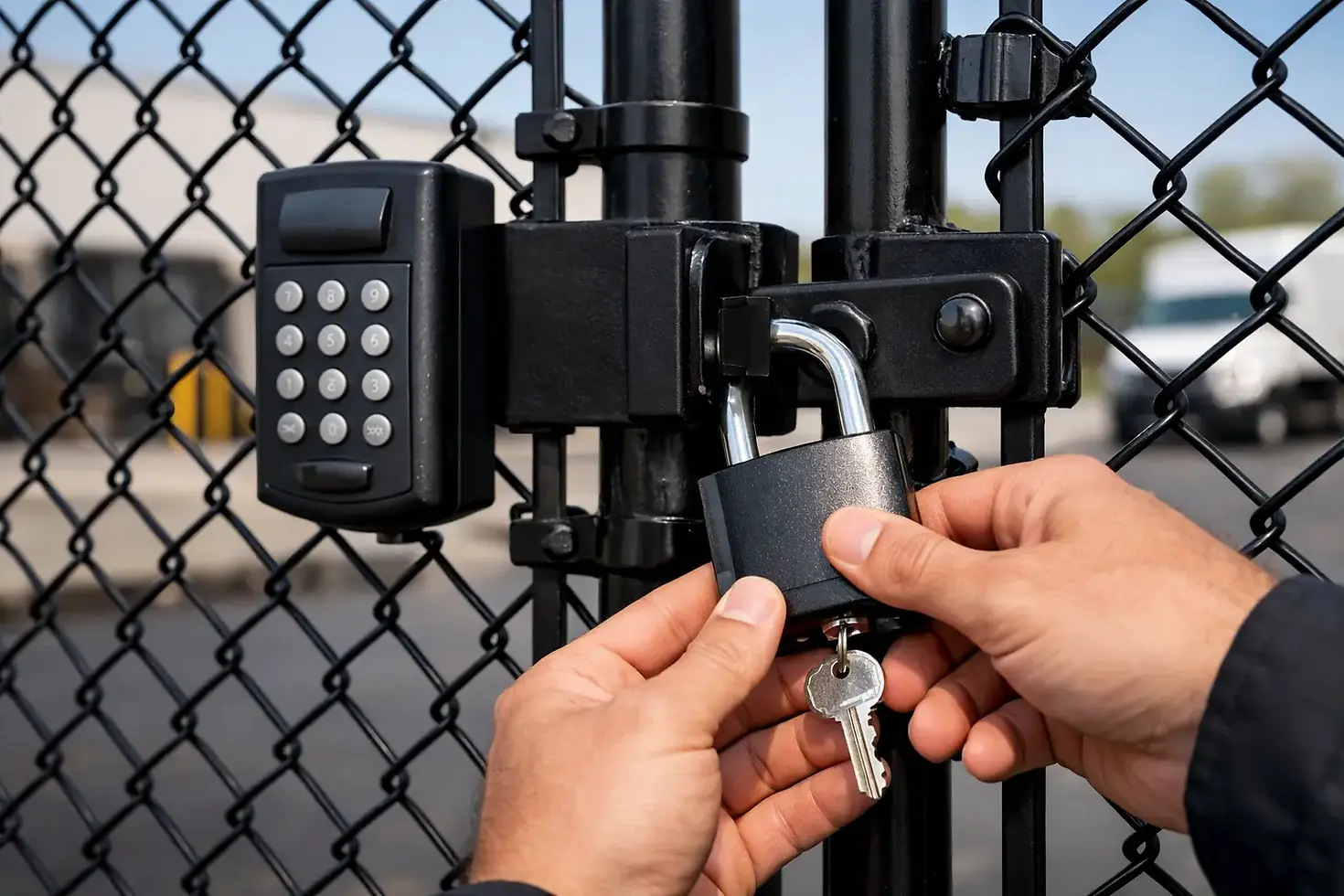
For a manually operated gate, choose a commercial latch that fully captures the gate and aligns reliably. A shielded or enclosed hasp helps limit access to the lock shackle, making bolt cutters and pry bars less effective. If a padlock is needed, use a weather-resistant, hardened model designed for outdoor commercial use. Shrouded-shackle designs offer additional protection because less of the shackle is exposed.
Consider where the locking point sits. A latch mounted at a reachable, exposed location may be easy to operate for staff but easier to attack. Protective latch boxes, guard plates, and interior-mounted hardware can improve security while maintaining practical access. On double gates, install a secure drop rod or center latch so both leaves cannot be forced apart.
Keys should be controlled as carefully as the gate itself. Keep a simple record of who has keys, retrieve them when employees leave, and rekey or replace locks after a lost key or contractor turnover. Shared combinations should also be changed periodically, particularly for sites with frequent staffing changes.
Add Access Control Where It Makes Sense
Electronic access control is not necessary for every commercial gate, but it can be a worthwhile investment for higher-traffic or higher-risk properties. It reduces the need for physical keys and gives management more control over who can enter and when.
A keypad works well for employees, vendors, or residents who need regular access. Card readers, key fobs, and mobile credentials offer better control because individual access can be removed without changing a code for everyone. Intercom and telephone-entry systems allow staff to verify visitors before opening a gate remotely.
For vehicle gates, an automated operator can be paired with keypad entry, radio remotes, license plate recognition, or an attended call box. The right option depends on traffic volume and how closely access needs to be tracked. A busy distribution yard may benefit from scheduled credentials and video verification, while a small storage facility may only need a managed keypad and reliable operator.
Automation adds responsibilities. Gate operators must include properly installed safety devices, such as photo eyes, monitored edges, and emergency release features, to help protect pedestrians and vehicles. These systems should be installed and serviced by qualified professionals. A security upgrade is not successful if it creates an unsafe entrance.
Protect the Area Around the Gate
The gate opening deserves the same attention as the gate itself. Good visibility discourages unauthorized activity and helps staff identify problems before they become expensive. Lighting near drive gates, pedestrian gates, and loading areas can improve safety after dark while supporting camera coverage.
Landscaping should not create a hiding place next to the entrance. Keep shrubs trimmed and avoid placing dumpsters, pallets, storage containers, or other climbable materials close to the fence line. If the site uses cameras, confirm that signs, vegetation, and gate movement do not block their view.
Physical barriers can help guide traffic and prevent vehicles from bypassing the entrance. Depending on the property layout, bollards, curbs, guardrails, or strategically placed landscaping may prevent drivers from going around an open or closed gate. For sites near public roads, clear signage can identify authorized entrances, visitor procedures, and after-hours restrictions.
Inspect Gates Before Minor Problems Become Failures
Commercial gate security is not a one-time project. Daily use, weather, settlement, and vehicle contact can loosen hardware and affect alignment. A gate that fails to close fully is often left propped open, which defeats the purpose of the fence.
Facility managers should regularly check four areas:
Gate alignment and smooth movement, including dragging, sagging, or binding
Hinges, rollers, latches, drop rods, and fasteners for wear or looseness
Locks, access devices, and safety equipment for consistent operation
Posts, framework, and nearby fencing for impact damage, corrosion, or cut areas
The inspection schedule depends on use. A gate operated dozens of times per day needs more frequent attention than a service gate opened once a week. After heavy storms, winter weather, or a vehicle strike, inspect the gate before returning it to normal operation.
Avoid Common Gate Security Mistakes
One common mistake is installing a strong lock on a gate that is easy to lift off its hinges, spread apart, or crawl under. Another is choosing an operator without planning for emergency access, power outages, maintenance, or safe pedestrian use. Security planning must account for the entire opening, not just the device that locks it.
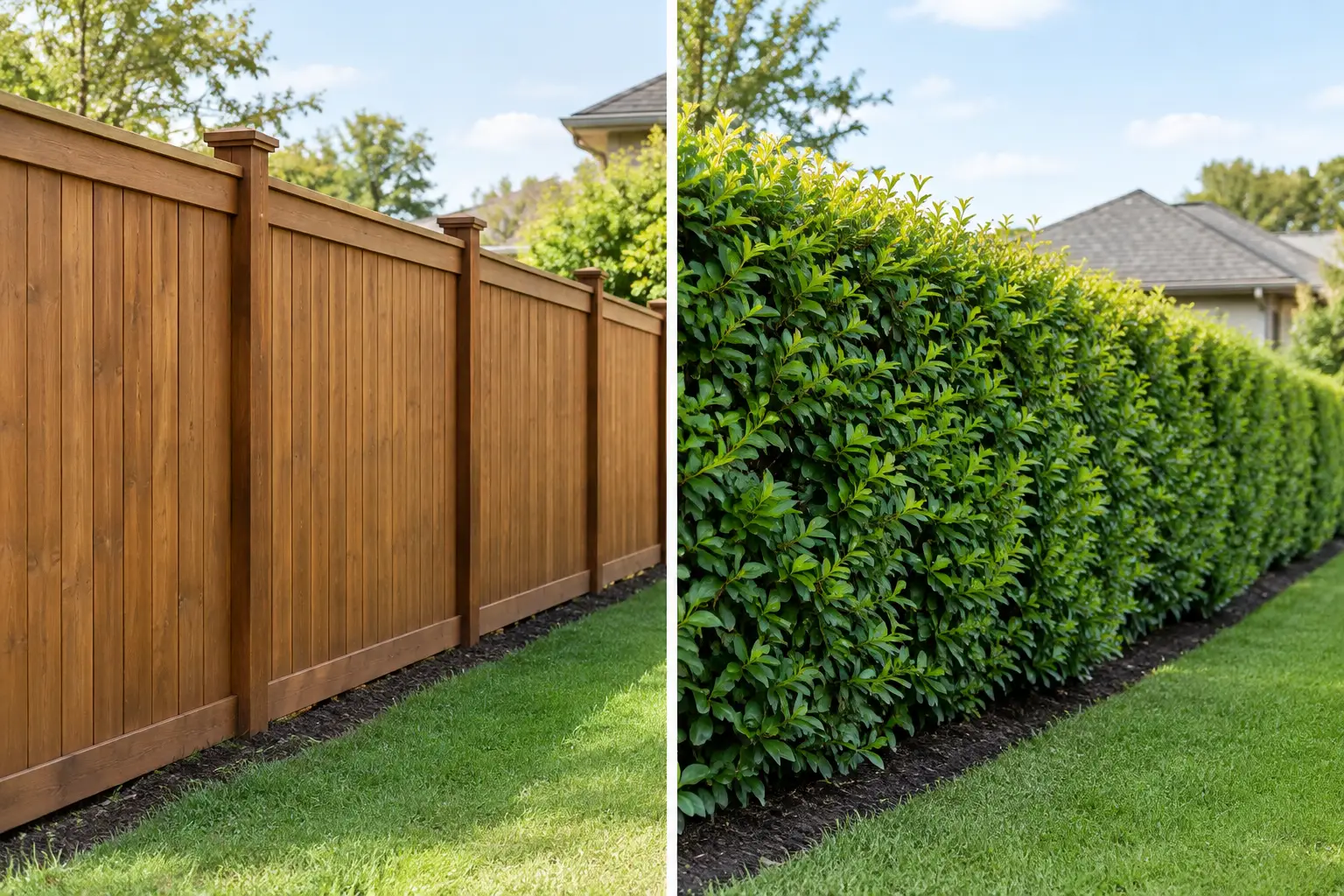
Businesses also sometimes select privacy screening without considering wind load. Privacy slats or solid panels can reduce visibility into a property, but they increase pressure on the fence and gate during high winds. The posts, framework, and gate design may need to be upgraded to support that added load.
Finally, avoid treating every entrance the same. A pedestrian gate near an office may need an attractive, code-conscious access solution, while a rear service entrance may need heavier hardware and limited access. Matching the solution to the location improves security without overspending.
Get a Gate Security Plan That Fits Your Property
The right commercial fence gate should work hard every day: closing properly, controlling access, supporting safe traffic flow, and standing up to local weather. Ekren Fence Company helps commercial property owners and facility managers evaluate gate layouts, fencing materials, hardware, and installation requirements for properties in Allentown, Bethlehem, Easton, and across the Lehigh Valley.
A professional on-site evaluation can identify weak points that are easy to miss, from undersized posts to poor gate clearance or exposed latch hardware. With the right gate design and dependable installation, your perimeter can provide the security and day-to-day reliability your operation needs.