Decorative Fence Color Trends for Lehigh Valley Homes

A fence is no longer treated as a background feature that simply marks a property line. Homeowners are using decorative fence color trends to coordinate outdoor living areas, frame landscaping, add contrast to siding, and make a backyard feel more intentional. The right color can make a privacy fence feel lighter, make a pool enclosure look more refined, or give a front-yard boundary a clean, finished appearance.
Color should still support the fence's main job. A beautiful fence that does not provide the privacy, security, pet containment, or pool safety your property needs is not the right solution. The best choice balances style with material performance, maintenance expectations, local requirements, and the look of your home over time.
Decorative Fence Color Trends That Fit Real Properties
The strongest fence colors are moving away from one-size-fits-all choices. Instead, homeowners are selecting colors that complement the fixed features already on the property: roof shingles, brick, stone, siding, decking, window trim, and mature trees. That approach gives the installation a more permanent, custom appearance.
Black remains the leading choice for aluminum fencing
Black aluminum fencing continues to be a favorite around pools, front yards, gardens, and open backyard perimeters. It creates a crisp outline without blocking the view of landscaping or the space beyond the fence. Against green lawns, stone patios, and light-colored siding, black has a polished contrast that works with both traditional and contemporary homes.
This color is especially practical for decorative aluminum fence installation because it keeps the focus on the fence's clean lines and ornamental details. Black can also visually recede from a distance, which is helpful when homeowners want a secure pool fence or pet boundary without making the yard feel closed in.
There is a trade-off. Dark aluminum can become warm in direct summer sun, and pollen or dust may be more noticeable in certain lighting. Even so, its durable powder-coated finish and low-maintenance appeal make it a dependable long-term choice for many Lehigh Valley properties.
Bronze and dark brown bring warmth without looking dated
Bronze and dark brown are gaining attention for properties with natural stone, brick facades, cedar accents, or wooded surroundings. These shades offer some of the same definition as black but with a softer, warmer result. Bronze aluminum can be particularly attractive near tan stonework or earth-toned hardscaping, where black may look too sharp.
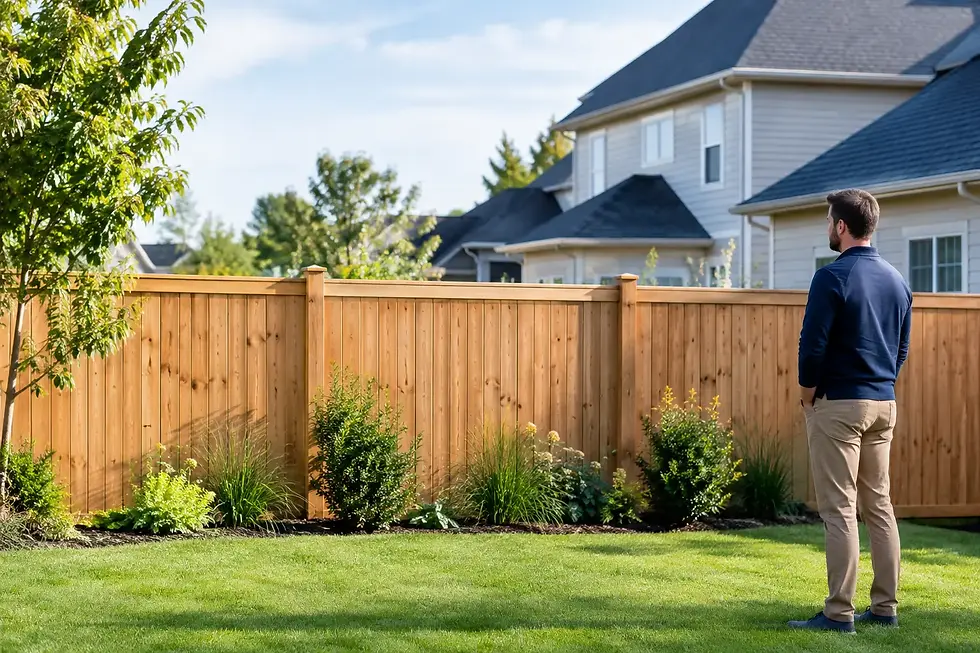
For wood fencing, rich brown stains remain a strong option. They show the grain of the wood and can make a privacy fence feel like part of the landscape rather than a solid wall around it. A semi-transparent stain offers a more natural look, while a solid-color stain provides more uniform coverage and can better disguise variations in boards.
Wood requires a realistic maintenance plan. Sun, rain, snow, and seasonal temperature changes affect finishes over time. A color that looks excellent on installation day may need cleaning, staining, or repainting later to maintain its appearance.
Warm white and soft neutral vinyl offer a cleaner alternative
White vinyl fencing is still a classic choice, especially for colonial-style homes, garden borders, and front-yard picket fences. The current preference, however, is often for softer whites and warm neutrals rather than bright, stark white. Almond, tan, sand, and light gray tones can better coordinate with beige siding, weathered stone, and neutral exterior trim.
Vinyl fence installation is a practical fit for homeowners who want a consistent color with minimal upkeep. It does not need routine painting or staining, and a simple wash can remove much of the ordinary dirt and pollen that accumulate through the season. For a backyard privacy fence, a light neutral can also prevent a smaller yard from feeling overly enclosed.
The right shade depends on exposure. A very light fence can show mud splash near garden beds or along areas where children and pets play. On the other hand, a dark vinyl privacy fence may absorb more heat and become a dominant visual feature. Reviewing samples outdoors, next to the home, is more reliable than choosing from a small indoor color chip.
Gray is a versatile middle ground
Gray has become a popular bridge between warm and cool exterior palettes. It pairs naturally with charcoal roofs, blue or gray siding, concrete patios, and modern deck materials. Light gray vinyl can create a calm, understated boundary, while deeper gray tones give a privacy fence a more contemporary presence.
Gray is not automatically the best answer for every home. Cooler shades can feel out of place beside warm red brick or golden stone. In those settings, a brown, bronze, or cream-colored fence often produces a more connected look. The goal is not to match every exterior color exactly. It is to select a tone that looks deliberate beside them.
Match Fence Color to the Material and Purpose
Color options vary by fencing material, and that matters before a project is designed. Aluminum offers durable powder-coated finishes that are well suited to decorative and pool fencing. Vinyl provides clean, uniform color options for privacy, picket, and ranch-rail styles. Wood offers the broadest flexibility because it can be painted or stained, but it also asks more from the owner over its lifespan.
Chain link fencing is increasingly available with black or green vinyl-coated finishes. For side yards, pet areas, athletic spaces, and commercial perimeters, these colors can look more finished than traditional galvanized chain link while maintaining the practical benefits of the material. Black is usually the more architectural choice; green can blend more quietly into heavily landscaped or wooded areas.
For commercial and industrial properties, color decisions often lean toward function and consistency. Black, bronze, and galvanized finishes can define a site perimeter, support access control, and coordinate with gates or building details without drawing unnecessary attention. Visibility, security requirements, and maintenance access should carry more weight than a residential color trend.
How to Choose a Fence Color With Confidence
Start with the colors you cannot easily change. Your roof, masonry, siding, and driveway are more permanent than a fence finish. Consider whether the fence should blend into the property or create a strong visual frame. A dark aluminum pool fence may be nearly invisible from the patio, while a white vinyl privacy fence becomes a noticeable architectural element.
Next, think about the view from both sides. A fence is seen from the kitchen window, deck, driveway, neighboring properties, and possibly the street. This is particularly important for corner lots and homes with elevated decks. Color samples should be viewed in morning sun, afternoon sun, shade, and against nearby planting beds before the final selection is made.
Homeowners should also check neighborhood association rules and municipal requirements early in the planning process. Some communities limit permitted fence colors, materials, or heights. Pool fencing has separate safety requirements that can affect style and gate placement. A professional fence contractor can help plan an installation that supports the desired appearance while addressing these practical requirements.
Avoid Choosing Only for the Current Trend
A fence is a long-term investment, so the most shareable color online is not always the best fit for your property. Black aluminum remains highly versatile, but it may not suit a home with a softer cottage-style exterior. A dramatic charcoal privacy fence can look excellent beside modern siding but overpower a small, shaded yard. Natural wood is timeless, yet it is not the low-maintenance choice for every household.
The better question is whether the color will still work after landscaping grows in, furniture changes, and the home is repainted. Neutral colors generally offer the most flexibility, while distinctive colors work best when they repeat an existing detail in the architecture or landscape.
For homeowners in Allentown, Bethlehem, Easton, and throughout the Lehigh Valley, a professional on-site conversation can make the decision much easier. Ekren Fence Company can help compare material samples, privacy needs, decorative styles, and installation details so the finished fence looks right for the property and performs reliably for years to come. Requesting a free estimate is a practical next step when you are ready to turn a color idea into a fence built around your home.