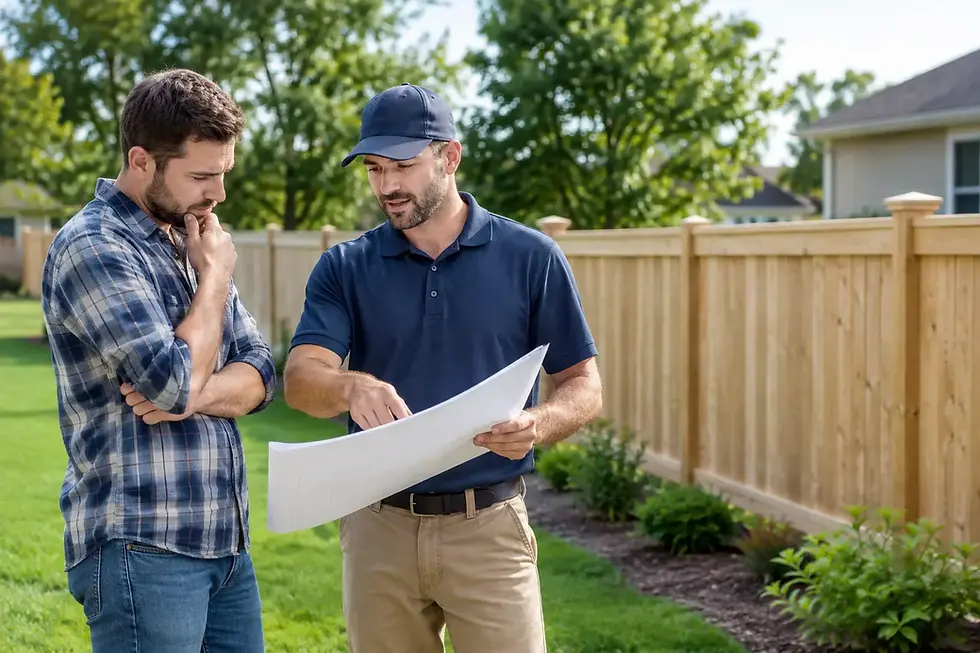
Best Fences for Noisy Backyards That Work

A backyard next to a busy road, active commercial property, school, or frequently used neighborhood street can make it difficult to enjoy a patio, pool, or quiet evening outside. The best fences for noisy backyards are tall, solid, well-built barriers with as few openings as possible. Material matters, but the details of the installation often matter just as much.
A fence will not turn a property beside a highway into complete silence. Sound can travel over the top of a fence, around its sides, and through any gaps. Still, the right privacy fence can noticeably reduce direct traffic noise, soften conversations and vehicle sounds, and make a backyard feel more private and comfortable.
What Makes a Fence Effective Against Noise?
For noise control, a fence needs mass, height, and continuous coverage. A lightweight or open-style fence may define the property beautifully, but it does little to block sound. Noise barriers work best when they interrupt the line of sight between the source of the noise and the area where people spend time.
A solid fence should have closely fitted panels or boards, secure posts, and minimal gaps at the bottom and sides. Even a narrow opening can allow sound to pass through. The fence also needs enough height to block more of the sound path. In many residential settings, a 6-foot privacy fence is the practical starting point, subject to local zoning rules, HOA requirements, and property-specific conditions.
The fence’s location is another important factor. Installing it closer to the noise source, while staying within the property line and applicable setbacks, can improve its effect. A professional site assessment helps identify slopes, drainage issues, utilities, gate locations, and local height limitations before installation begins.
Solid Vinyl Privacy Fences for Low-Maintenance Noise Control
Vinyl privacy fencing is one of the strongest choices for homeowners who want a clean appearance, dependable privacy, and minimal upkeep. Full-panel vinyl privacy fences create a continuous barrier without the spaces found in picket, rail, or decorative fence styles. They do not rot, require staining, or need frequent repainting, which makes them especially appealing for busy households.
For noisy backyards, choose a solid-panel vinyl design rather than one with wide decorative openings near the top. A small lattice accent may work for appearance, but a fully solid top section generally provides better sound interruption. Vinyl fence panels should also be professionally installed so they remain straight, secure, and properly supported through changing Pennsylvania weather.
Vinyl is an excellent option for properties in Allentown, Bethlehem, Easton, and throughout the Lehigh Valley where homeowners want a polished privacy fence that holds its color and appearance over time. While it may have a higher upfront cost than some wood options, the lower maintenance requirements can add long-term value.
Wood Privacy Fences Offer Weight and Customization
A properly built wood privacy fence can be highly effective for reducing backyard noise. Wood has natural density, and closely placed boards form a substantial visual and sound barrier. It is also one of the most customizable fencing materials, allowing homeowners to choose fence height, board style, cap details, stain color, and gate design.
Board-on-board wood fencing is often a smart choice when noise and privacy are both priorities. In this design, boards overlap, covering the seams between pickets. That overlap reduces visible gaps that can occur as wood naturally expands and contracts. A tongue-and-groove design can also create a more continuous surface when constructed correctly.
The trade-off is maintenance. Wood fences need periodic inspection, cleaning, sealing, or staining to protect against moisture, sun exposure, and normal wear. Posts, fasteners, and gates should be built to handle the fence’s weight and local weather conditions. For homeowners who appreciate the warmth and character of natural wood, the maintenance is often worthwhile.
Why standard stockade fencing may not be enough
A basic stockade fence can provide privacy, but its performance against sound depends on construction quality. Spaces between boards, shrinking wood, uneven ground, and unsealed bottom gaps can reduce its effectiveness. A custom-installed wood privacy fence with overlapping or tightly fitted boards is usually the better choice for a consistently noisy property.
Composite and Specialty Acoustic Barriers
Some homeowners consider composite fencing or purpose-built acoustic barrier systems for locations with persistent, higher-volume noise. Composite materials can offer a solid appearance and low-maintenance benefits, though available designs, cost, and installation requirements vary. Specialty acoustic barriers are engineered specifically for sound reduction and may use denser materials than conventional residential fencing.
These options can make sense near major traffic corridors, industrial activity, or commercial loading areas. However, they are not automatically the right solution for every yard. A specialty barrier may be more expensive, require engineering considerations, or have height restrictions that affect the final design. A well-installed solid vinyl or wood privacy fence is often the more practical residential answer.
Fence Styles That Do Little to Reduce Noise
Not every attractive fence is a sound-control fence. Aluminum fencing, chain link fencing, split rail, and traditional spaced-picket styles are excellent for specific needs, including pool safety, pet containment, security, visibility, and property boundaries. Their open construction, however, allows sound to travel freely.
An aluminum fence can be a great addition around a pool or along the front of a property, but it should not be the primary choice if traffic noise is the main concern. Chain link is a cost-effective perimeter solution and can be improved with privacy slats or screening, yet it generally will not perform like a solid privacy fence. Slats may increase visual privacy, but they do not create the mass or continuous surface needed for meaningful noise reduction.
Height, Gaps, and Ground Conditions Matter More Than Many Homeowners Expect
The difference between an average privacy fence and an effective noise barrier often comes down to installation details. A fence that leaves a long gap below the panels on sloped ground can allow road noise directly into the yard. Stepped panels may be necessary on a slope, but the layout should be planned to keep openings as limited as possible.
Fence height also has practical limits. Many municipalities regulate residential fence height, particularly in front yards, corner lots, and areas near driveways. Homeowners associations may have separate standards for materials, colors, and styles. Before choosing an 8-foot or taller design, confirm what is permitted for the property.
A solid gate is another detail worth considering. If the fence line faces the road but the gate is open, loosely fitted, or built with large gaps, it becomes a weak point. Matching privacy gates, secure latches, and properly aligned hardware help maintain both privacy and the fence’s overall performance.
Improve Results With Landscaping and Backyard Layout
A fence works best as part of a broader backyard plan. Dense evergreen plantings inside the fence can add visual screening and make the space feel calmer, although plants alone rarely block a significant amount of noise. The bigger benefit is creating a layered buffer between the home and the noise source.
Move seating areas, outdoor kitchens, and play spaces farther from the road-facing fence when possible. A covered patio, pergola with side curtains, water feature, or strategically placed storage structure may also make conversations more comfortable by masking intermittent sounds and redirecting attention away from traffic.
If the property has enough room, combining a solid fence with a modest landscaped berm can be especially effective. The terrain adds height to the barrier without relying only on a taller fence, though drainage and grading must be handled carefully.
Choosing the Right Fence for Your Property
For most homeowners, the best answer is a 6-foot solid vinyl privacy fence or a custom wood privacy fence with closely fitted or overlapping boards. Vinyl is usually the better fit for low-maintenance performance and a consistent finished look. Wood is ideal when you want greater design flexibility, natural character, or a customized approach to uneven terrain.
The right choice depends on the source of the noise, your lot layout, local regulations, desired maintenance level, and budget. A professional fence contractor can evaluate those factors and recommend a design that improves privacy without overlooking practical needs such as gates, drainage, pets, pools, or access to the yard.
With more than 25 years of installation experience, Ekren Fence Company helps Lehigh Valley homeowners choose privacy fencing that is built for the way they use their property. The most effective noise-reducing fence is not simply the tallest panel available. It is the solid, properly placed, professionally installed fence that fits your yard and gives you a more comfortable place to come home to.